
Chinese tech brands range from phone makers and software platforms to computer, drone and chip companies, and most of them trace their growth to a few manufacturing regions, especially the Pearl River Delta around Shenzhen.
This guide is an independent overview that maps the industry and points to detailed explainers on each topic. It is not affiliated with any company named here.
Mapping China’s consumer tech industry
It helps to think about the industry in layers. At the base sit the factories and component markets where devices are physically made. Above them sit the brands that design and sell phones, laptops, drones and other products. On top sit the software platforms, such as operating systems, messaging apps and payment services, that people actually spend their day in. Each layer has its own companies, its own history and its own rules for buyers outside China.
The layers also overlap. A phone brand may run its own operating system, a platform company may sell hardware, and a manufacturer in one city may assemble devices for brands headquartered in another country. Reading about any single company in isolation can therefore be misleading, which is why this guide groups the topics by what they do rather than by alphabetical order.
The sections below follow the same order as the layers. First comes where things are made, then the phone brands and their software, then the apps and platforms, then the computers, drones, cars and chips, and finally the practical questions that come up when a reader in another country wants to buy or use one of these products.
A short list of dates, taken from the sources cited later in this guide, gives a sense of the timescale.
- 1979: Shenzhen is developed from a largely rural village area into a city.
- 1980: Shenzhen is designated the first special economic zone in China.
- 1984: Lenovo is founded in Beijing as Legend.
- 1995: BBK Electronics is founded.
- 2005: Lenovo acquires IBM’s PC business, which produced the ThinkPad line.
- 2010: Xiaomi is co-founded by Lei Jun and six others.
- 2019 to 2024: HarmonyOS versions are built by integrating the Android Open Source Project with OpenHarmony.
- 2023: Huawei announces HarmonyOS NEXT.
The dates come from the Wikipedia entries for Shenzhen, Lenovo, BBK Electronics, Xiaomi and HarmonyOS.
Most company facts below come from the encyclopedia entries linked in the text, which in turn cite filings and news reports. Readers who need current financial or regulatory detail should go to each company’s own investor pages and to the relevant government agency.
Where the devices are made: hubs and markets
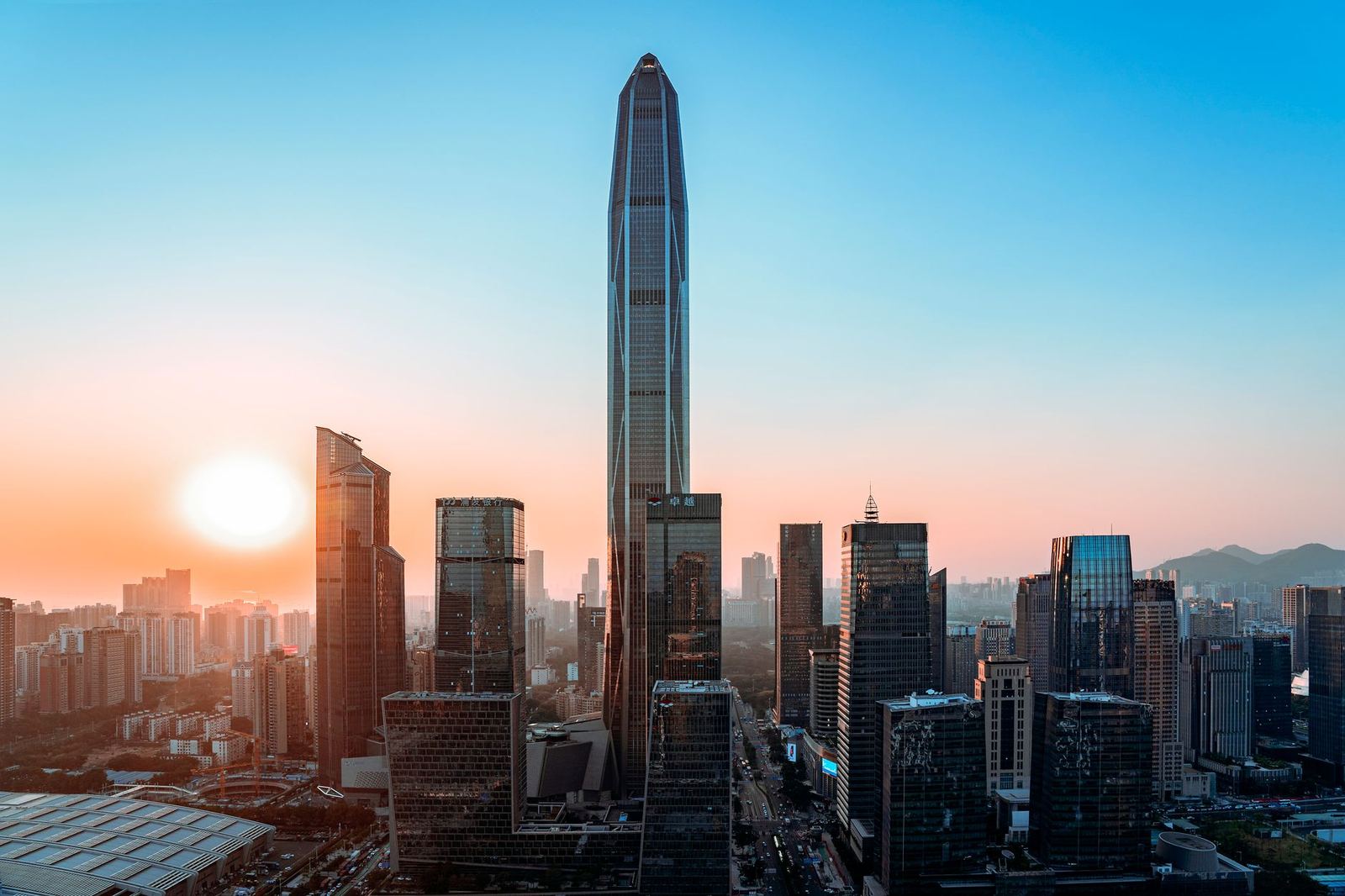
The best-known manufacturing centre is Shenzhen. According to the Wikipedia article on Shenzhen, the Central Committee designated it as the first special economic zone in China in May 1980, after it was developed from a largely rural village area into a city in 1979. The same article says the city is sometimes called China’s Silicon Valley and names Huawei, Tencent, DJI and Oppo among the large technology corporations that grew there. The full story is told in the explainer on shenzhen electronics.
Shenzhen is also home to a famous wholesale district. The Shenzhen article describes Huaqiangbei as a wholesale hub for consumer high-tech products like smartphones and gadgets, and the entry on Huaqiangbei says the area had about 38,000 businesses in 2020. A walk through the malls, stalls and component counters is described in the guide to the huaqiangbei market.
A district like this works because buyers can compare parts, ask for samples and place small orders in the same afternoon. It also means that quality varies widely from stall to stall, so the brand names on a counter are not a guarantee of anything. Anyone buying from a market should read the manufacturer’s documentation and the rules of their own country before importing a product.
Markets of this kind gave rise to a particular style of product. The word shanzhai is described in the Wikipedia entry on Shanzhai as a Chinese term literally meaning mountain fortress, with a contemporary use that usually covers counterfeit, imitation or parody products. In phones, the story of those copycat handsets and what they led to is covered in the history of shanzhai phones.
Hong Kong sits next to Shenzhen and has long served as a trading and shopping gateway. For readers who want to know how its electronics districts work, the guide to hong kong electronics shopping explains the main areas and what to check before buying.
Not every well-known device is assembled in Shenzhen. The Wikipedia entry on Foxconn describes the company as a Taiwanese multinational electronics contract manufacturer. It says the Zhengzhou Technology Park in Henan province employed 200,000 workers as of November 2022 and produces the bulk of Apple’s iPhone line, earning the nickname iPhone City. How a phone design becomes a finished product, and which companies handle each step, is explained in the article on who makes iphones.
Phone brands and the software they run
Smartphones are the most visible product category, and a few corporate families dominate the story. For a reader outside China, the practical questions are usually which brand owns which label, which software the phone runs, and whether the handset is meant for the domestic market or for export. The paragraphs below take those questions in turn, with a link to a fuller explainer for each.
Xiaomi is the best known of the newer entrants. According to the Wikipedia entry on Xiaomi, the company was co-founded by Lei Jun and six others on 6 April 2010, released its first smartphone in August 2011, and by 2014 had the largest market share of smartphones sold in China. The same entry describes it as the third-largest smartphone seller in the world as of 2025, behind Apple and Samsung. The company’s path from software to hardware is told in the account of xiaomi history.
Another family of phone brands comes from a single parent. The entry on BBK Electronics describes it as a Chinese multinational electronics conglomerate created by Duan Yongping, founded on 18 September 1995 and later split and deregistered, with Oppo and Vivo as successors. The relationships among Oppo, Vivo, OnePlus and Realme can be confusing, and the explainer on bbk electronics brands sets them out.
Huawei took a different path with software. The Wikipedia entry on HarmonyOS describes it as a distributed operating system developed by Huawei for smartphones, tablets, smart TVs, smart watches, personal computers and other smart devices. It says that from 2019 to 2024 the operating system was built by integrating the Android Open Source Project with OpenHarmony, which let it support both HarmonyOS and Android apps, and that Huawei announced HarmonyOS NEXT on 4 August 2023. A plain-language comparison with Android is in the explainer on harmonyos.
Brand histories only explain who makes phones. To see how many each of them sells in the domestic market, the article on china smartphone market share looks at the sales rankings published by analyst firms and explains how those rankings are produced.
Finally, a phone sold inside China can differ from the same model sold abroad. The software, the pre-installed apps and the services may all change, and the guide to global vs china rom explains what those differences are and why they matter to someone importing a handset.
Apps, platforms and payments
These services are often bundled: one account may handle messaging, payments, shopping and entertainment, which is a different arrangement from the separate apps most Western users are used to. The most important company is Tencent. The Wikipedia entry on Tencent describes it as a Chinese multinational technology conglomerate and holding company headquartered in Shenzhen. Its business spans messaging, games and other services, and the overview of what is tencent explains how the pieces fit together.
The guide to what is wechat describes what the app does and why people call it a super app.
Payments are built into the same ecosystem. Visitors to China often find that cards are less useful than mobile wallets, and the explainer on alipay for foreigners sets out how the main services work for people who do not have a local bank account. Rules and supported methods change, so check each provider’s own help pages before travelling.
Short video is another area where the Chinese and global versions of an app differ. According to the Wikipedia entry on TikTok and Douyin, TikTok is blocked in mainland China and Hong Kong, and Douyin is available there instead, and the two platforms operate separately even though their interfaces are similar. The differences in detail are covered in the comparison of tiktok vs douyin.
Computers, drones, cars and chips
Consumer technology from China is not limited to phones and apps. Several other sectors have produced brands that are well known worldwide, and each has its own rules for buyers, from software support for laptops to flight regulations for drones and safety approvals for cars. The groups below share one feature: they depend on the same supply chains described earlier, so changes in components, trade rules or demand tend to reach all of them.
In personal computers, the main name is Lenovo. The Wikipedia entry on Lenovo says it was founded on 1 November 1984 as Legend, and became the world’s largest personal computer vendor by unit sales for the first time in 2013. Lenovo’s own press release of May 1, 2005 announced the closing of its acquisition of IBM’s Personal Computing Division. The full corporate story is in the article on lenovo history.
In drones, DJI is the name most people know. Its Wikipedia entry describes it as a Chinese technology company headquartered in Shenzhen that manufactures commercial unmanned aerial vehicles. Drone ownership comes with regulations that vary by country, and the guide to chinese drone makers looks at the main manufacturers and the rules that apply to flying their products.
Electric vehicles are a newer consumer-technology category, because modern cars carry screens, software and driver-assistance systems. The overview of chinese ev brands introduces the main car makers and how they differ.
All of these products depend on semiconductors. The entry on Semiconductor Manufacturing International Corporation describes it as the largest contract chip maker in mainland China. The wider effort to build a domestic chip supply, and the trade restrictions that shaped it, are described in the article on the china semiconductor industry.
Buying and using devices from China
The last group of questions is practical. A reader outside China who wants to buy a device made by one of these companies faces choices about where to buy, what warranty applies, and whether the product will work on local networks.
Ordering from an overseas shop raises issues that a local purchase does not. The guide to buying electronics from china covers warranty coverage, import duties and plug types, which differ between countries. Duty and warranty rules are set by local authorities and the seller, so confirm them with those parties.
Compatibility matters just as much. The explainer on phone network bands shows how to compare a handset’s supported bands with a carrier’s, using the manufacturer’s specification page and the carrier’s own coverage information.
Readers who are still deciding what kind of device to look for may find the related guides on this site useful. The gadget buying guide covers general principles for comparing specifications and longevity, and the article on how to choose a smartphone explains the specifications that matter most when choosing a phone.
Two further checks are worth making before any purchase. First, find out who handles repairs and returns in your country, because a warranty from a seller overseas may be difficult to use. The guides linked in this section explain how to approach each check for the products in question.
Whatever the brand, the same habits apply. Read the manufacturer’s own specification and support pages, compare the warranty terms in writing, and be cautious about claims that cannot be traced to a source.
How to read the industry’s story
Stories about Chinese technology often take one of two forms: a celebration of speed and scale, or a warning about copying and control. Neither captures the range of companies described above.
A useful way to avoid slogans is to ask a few plain questions of any company. What does it sell, and to whom? Who owns it, and where is it headquartered? Which products does it design, and which does it only assemble for others? And which source supports each claim? Annual reports, regulator filings and manufacturer documentation answer those questions better than a headline.
It is also worth separating brands from places. Shenzhen is a city, Guangdong is a province, and China is a country; a company with a Shenzhen headquarters can build in Zhengzhou, sell in Europe and list its shares in Hong Kong. Likewise, a brand name does not always tell you who owns the company that sells under it, as the BBK family shows.
Another habit that helps is to look for the date on every claim. A ranking that held in a given year may be reversed later, and a policy that applied to a product category may not apply to others. This guide therefore names the year wherever a figure appears, and the linked explainers do the same.
The topics on this page will keep changing, which is why each linked explainer cites its sources and is dated where figures are involved. When a number matters for a decision, use the primary source it came from and check the date.
Frequently asked questions
What counts as a Chinese tech brand?
Show answer
There is no official definition. In this guide the phrase covers companies headquartered in mainland China or Hong Kong that sell consumer devices, software or services, such as Xiaomi, Huawei, Lenovo, Tencent and DJI.
Why are so many electronics companies based in Shenzhen?
Show answer
The Shenzhen article describes a combination of a special economic zone designation, proximity to Hong Kong and a growing cluster of manufacturers and software firms. Details are in the Shenzhen explainer linked above.
Is a phone made in China the same as a Chinese brand?
Show answer
No.
Where can I check current figures for these companies?
Show answer
Use each company’s annual report or investor relations page, and for market rankings use the published reports of analyst firms, noting the year and region each figure covers.