HarmonyOS is the operating system developed by Huawei, a Chinese technology company, for phones, tablets, wearables and other connected devices. Early versions shared code with Android, while the current generation runs only apps built for HarmonyOS itself.
It is one of the most closely watched software efforts among the chinese tech brands, and this guide explains what it is and how it has changed.
What HarmonyOS is and where it started
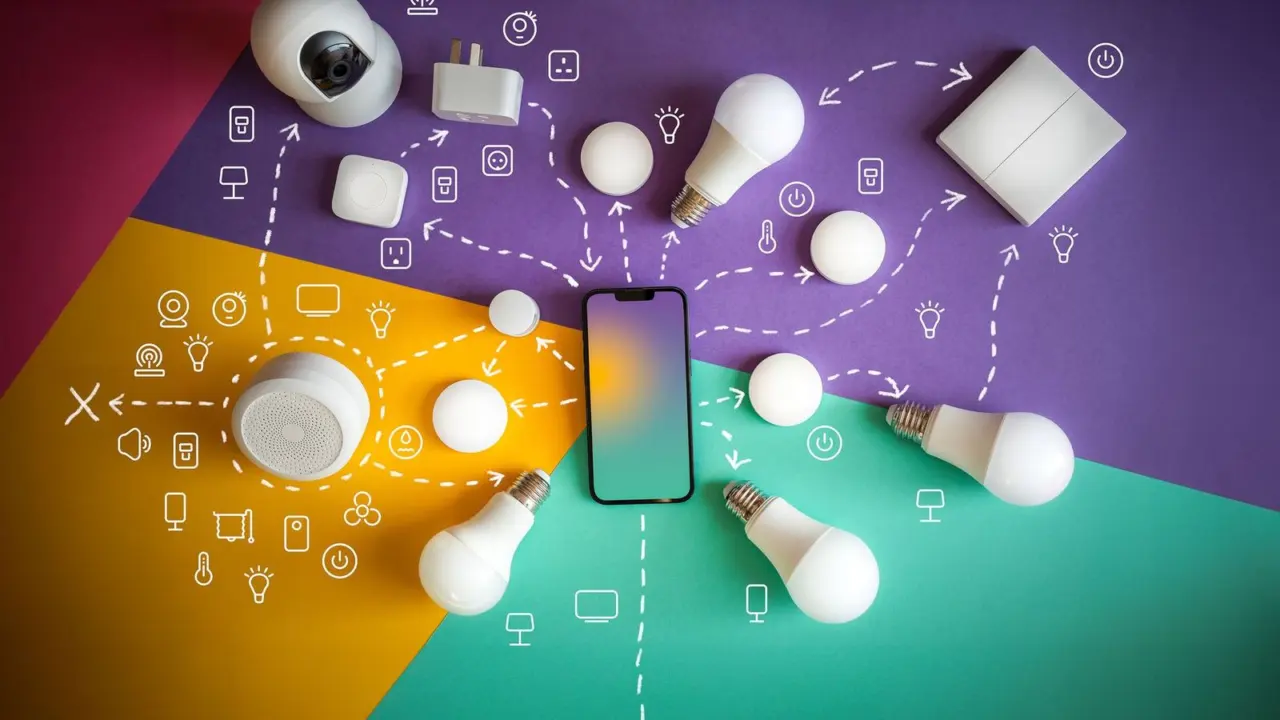
Huawei describes HarmonyOS as a next-generation operating system that can run on a wide range of smart devices. The idea is that different devices speak the same software language, so a phone, a tablet, a watch and a television can work together. Caixin Global reported that Huawei initiated the HarmonyOS project in 2015, originally targeting Internet of Things applications such as autonomous driving and industrial automation.
Wikipedia states that HarmonyOS was officially launched by Huawei in August 2019 and was first used in Honor smart TVs. That origin matters, because it shows the system began as a software layer for connected devices and only later became a smartphone platform.
Phones followed. Huawei’s own HarmonyOS 2 page presents it as a system for phones, tablets and laptops that work together, with features such as service widgets that appear when you swipe up on an app icon. The common thread is the connected-device approach rather than a single phone interface.

The features Huawei emphasises
Huawei highlights device-to-device features more than anything else. On its HarmonyOS 2 page, the company describes a control panel with a Super Device button that lets users manage device connections and transfer audio and video playback from one device to another. It also describes a tablet that can be turned into an expansion screen for a laptop with Extend Mode.
Service widgets work in the same spirit. Huawei says they let a user see the information they want and control key functions in an instant, without needing to open the app, and that they can be pinned to the home screen in a variety of formats and sizes.
These are manufacturer descriptions, and they show the design goal: one account and one software family spanning several screens. For readers comparing ecosystems, that is the same idea Apple and Google pursue in their own ways, which is covered in other guides on this site.
The company also uses the name HarmonyOS for a family. OpenHarmony, according to Wikipedia, is an open-source version of HarmonyOS donated by Huawei to the OpenAtom Foundation. That split between an open-source base and Huawei’s commercial system is one reason the name can mean different things in different articles.
From Android compatibility to a separate system
Earlier HarmonyOS versions for phones could still run Android apps, and the current ones cannot. Wikipedia describes the older versions as built by integrating the Android Open Source Project with OpenHarmony, which allowed them to support both HarmonyOS and Android apps.
The break came with HarmonyOS NEXT. Caixin Global reported in January 2024 that Huawei launched HarmonyOS NEXT, which would no longer support Android apps and could only accommodate apps specifically developed for it. Wikipedia states that HarmonyOS NEXT was announced on August 4, 2023, and officially launched on October 22, 2024, and that since version 5 HarmonyOS only supports apps in its native app format. The NEXT label was later dropped, and the generation is now simply numbered HarmonyOS 5 and above.
Huawei’s phones announced afterwards carried the new system. Caixin Global reported that the Mate 70 series and Mate X6 foldable, unveiled in late November 2024, reaffirmed the company’s focus on high-end smartphones and its independent HarmonyOS ecosystem.
What changed under the hood
HarmonyOS NEXT changed the foundations, not just the interface. Wikipedia states that it replaced the OpenHarmony multi-kernel system with Huawei’s own HongMeng Kernel at its core and removed all Android code.
For users, the visible effect is the app format. Wikipedia lists the app types on the platform as native apps that can be installed from AppGallery, installation-free Quick apps and lightweight Meta Services accessible on various devices. Apps that are lighter than a full install fit the connected-device idea described in the first section, where one service can follow the user between screens.
The rollout was staged. Caixin Global reported that the beta for developers would come in the second quarter of 2024 and the general version for consumers in the fourth quarter. Wikipedia states that Huawei announced the HarmonyOS NEXT Developer Beta at its developer conference keynote on June 21, 2024.
The app ecosystem question
The main challenge for a system that cannot run Android apps is building enough of its own. Caixin Global reported in June 2025 that HarmonyOS had passed 8 million registered developers, with more than 30,000 apps available on the platform, which runs on over 40 of the company’s devices.
Those figures come from the company’s own developer conference as relayed by the outlet, so they describe what Huawei announced rather than an independent audit. They also show why app count is the number to watch: a phone is only as useful as the apps it can run, and a native library has to be built from scratch rather than inherited.
Developers who want to reach HarmonyOS users build with the company’s tools rather than reusing an Android package. Wikipedia lists ArkTS among the languages for the platform and states that Huawei announced its Cangjie programming language for the native system, which is a sign of how deliberately separate the platform has become.
Key dates at a glance
The milestones below follow the public timeline from first launch to the 2025 developer figures.
| Date | Milestone |
|---|---|
| August 2019 | HarmonyOS officially launched, first used in Honor smart TVs |
| August 4, 2023 | HarmonyOS NEXT announced |
| October 22, 2024 | HarmonyOS NEXT officially launched |
| June 2025 | More than 8 million registered developers announced |
Dates come from Wikipedia’s HarmonyOS entry and Caixin Global’s June 2025 report.
How HarmonyOS fits among Chinese phone makers
HarmonyOS is specific to Huawei. Other major Chinese phone makers use software built on Android, with their own interfaces on top. For the background on one of them, see the guide to xiaomi history, and for the group of related brands behind several others, the explainer on bbk electronics brands.
For a buyer, the practical question is compatibility. Because current HarmonyOS phones do not install Android apps, anyone considering one should check that the apps they depend on exist in Huawei’s own app store. The store listing is a more reliable guide than any general claim about the platform.
Taken together, the pattern is a company building a complete software stack of its own: a kernel, an app format, a programming language and a developer community. How far that stack can stand beside Android and iOS depends largely on the app count and on how many developers keep building for it, which is why the developer figures in this guide are the ones worth tracking over time.
Frequently asked questions
Is HarmonyOS the same as Android?
Show answer
No. Earlier versions were built with the Android Open Source Project and could run Android apps, but HarmonyOS NEXT and later versions removed Android code and run only native apps.
Who makes HarmonyOS?
Show answer
Huawei develops HarmonyOS. Caixin Global reports that Huawei started the project in 2015, and an open-source version, OpenHarmony, was donated to the OpenAtom Foundation.
Can HarmonyOS run Android apps?
Show answer
The current generation cannot. Caixin Global reported that HarmonyOS NEXT no longer supports Android apps and accommodates only apps developed for it.
Does HarmonyOS only run on phones?
Show answer
No. Huawei describes it as an operating system for a wide range of smart devices, including tablets, wearables and laptops.