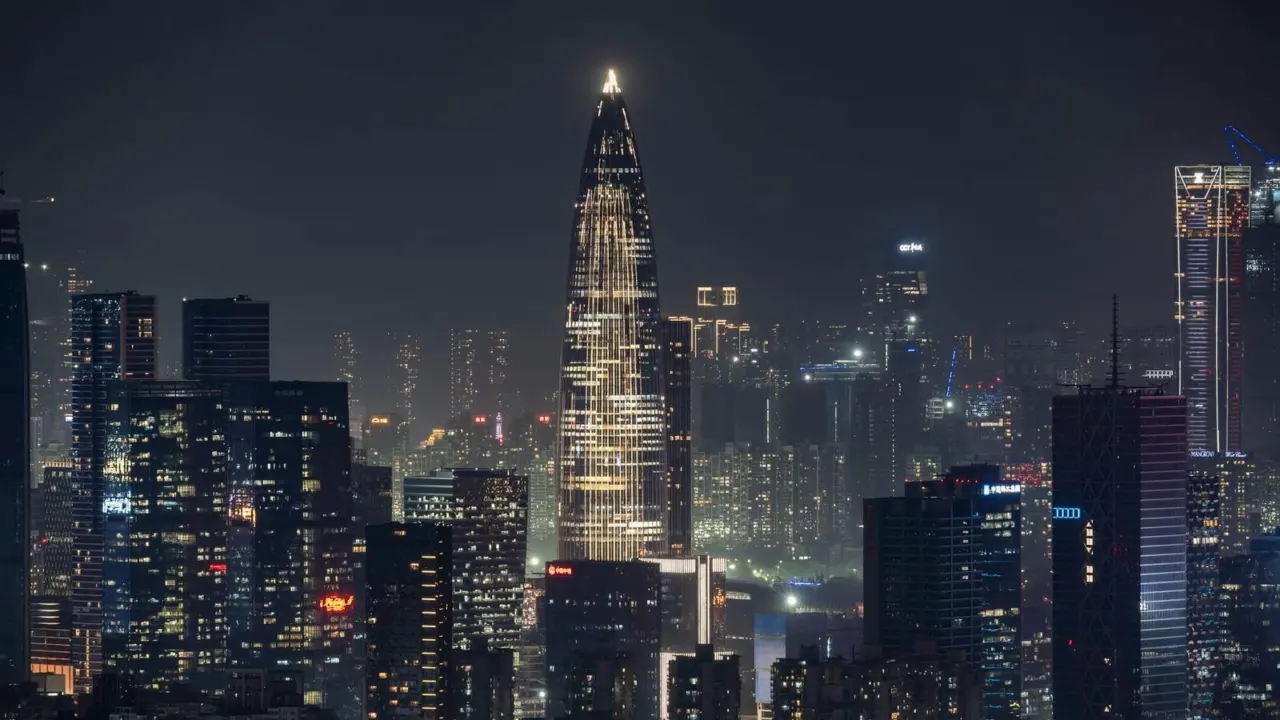
Shenzhen electronics refers to the dense cluster of device makers, component suppliers and wholesale markets in this Guangdong city, which grew from a largely rural area in 1979 into one of the world’s best-known technology centres.
This page is an independent explainer. For the wider picture of the industry, see the overview of chinese tech brands and the cities behind them.
From rural area to special economic zone
According to the Wikipedia article on Shenzhen, Shenzhen was developed from a largely rural village area into a city in 1979. The change that followed was a policy decision rather than a market accident. In May 1980 the Central Committee designated Shenzhen as the first special economic zone in China, as the same source records.
A special economic zone, or SEZ, is described in the Wikipedia entry on China’s special economic zones as a designated area with economic policies and regulations designed to attract foreign business. Shenzhen was one of four initial zones, and the same entry says these initial zones were all established from 1980 to 1981.
Location mattered as much as policy. The Shenzhen article attributes the city’s status as the first zone to the reform and opening up introduced by Deng Xiaoping and to its close proximity to Hong Kong, which drew foreign direct investment and migrants searching for opportunities. A border city next to a major trading port could bring in capital, parts and know-how, and ship finished goods out again.
The scale of the change
The numbers show how fast the city grew. In 1980, Shenzhen had a population of 30,000, according to the Shenzhen article. By 2025 the same article gives a population of 18.2 million, and it describes Shenzhen as the third-most-populous city by urban population in China after Shanghai and Beijing.
Trade infrastructure grew alongside the people. The article notes that the Port of Shenzhen is the world’s fourth-busiest container port. For electronics this is significant, because components and finished devices both move in containers, and a major port next to the factories shortens the path between a design and a customer overseas.
The city also built dedicated industrial districts. The Shenzhen High-tech Industrial Development Zone is described as helping to develop the city’s high-tech industry in areas such as electronics and information technology.
How a supply-chain cluster works
Economists often use the word cluster for a place where many firms in related businesses sit close together. In electronics that has practical effects that apply to any such region, not only this one.
- Parts suppliers, board assemblers and device makers can reach one another within a short trip, so a design change can be tested quickly.
- Small firms can buy standard parts instead of making everything themselves, which lowers the cost of starting a hardware company.
- Engineers who move between firms spread know-how across the whole district.
- Logistics providers, packaging suppliers and testing services set up nearby because the demand is steady.
Those features explain why hardware start-ups and established brands alike are drawn to the area. The Shenzhen article says the city’s entrepreneurial, innovative and competitive culture has resulted in numerous small manufacturers and software companies, and it adds that Shenzhen is sometimes called China’s Silicon Valley.
Companies that grew in the city
The Shenzhen article names several firms that grew out of this environment and became large technology corporations: Huawei, Tencent, DJI and Oppo. Each is a different kind of business, which shows how broad the cluster is.
- The Wikipedia entry for Tencent describes it as a Chinese multinational technology conglomerate and holding company headquartered in Shenzhen. The company behind the messaging app is covered in more detail in this explainer on what is tencent.
- The entry for DJI describes it as a Chinese technology company headquartered in Shenzhen that manufactures commercial unmanned aerial vehicles, commonly called drones.
- Huawei and Oppo are named in the Shenzhen article as large corporations that emerged from the city’s environment.
A contract manufacturer is a company that assembles devices for brands that design their products elsewhere. Foxconn, described in its Wikipedia entry as a Taiwanese multinational electronics contract manufacturer, is a well-known example in China, although the park that produces the bulk of Apple’s iPhone line is in Zhengzhou rather than Shenzhen. The supply chain behind that work is explained in the article on Foxconn and the companies it serves.
Huaqiangbei, the market district
The retail side of the cluster is concentrated in Huaqiang North, usually written Huaqiangbei. The Shenzhen article says it is known for having one of the largest electronics markets in the world, and describes Huaqiangbei as a wholesale hub for consumer high-tech products like smartphones and gadgets.
According to the Wikipedia entry on Huaqiangbei, the area had about 38,000 businesses in 2020. A closer look at how the stalls and malls are organised, and what a visitor can expect, is in the guide to the huaqiangbei market.
Anyone considering buying from such markets should treat them as trade districts rather than ordinary shops. Warranty terms, return rights and import rules differ from country to country, so check the manufacturer’s own documentation and the customs rules in the destination country.
What the cluster means for the wider industry
The Shenzhen story is often told as a success of manufacturing speed, but it also shows how policy and geography combine. A government decision created a zone with its own rules. A land border with Hong Kong supplied trade connections. Migrants supplied labour. A port supplied the route to export markets. Over several decades, those pieces attracted the suppliers that make the next round of products cheaper and quicker to build.
It also shows the limits of the label. Not every Chinese consumer brand is based in Shenzhen, and not every device assembled in China is made there. Other hubs and brands appear in the broader overview of the industry, and the city should be read as one major centre among several.
Reading claims about the Shenzhen cluster
Popular accounts of the city tend to compress a long story into a slogan, so it helps to separate what can be checked from what is only repeated. Population figures, the date of the special economic zone decision and the ranking of the port are checkable and come from the published record. Phrases such as the capital of hardware are descriptions, not measurements.
It is also worth asking what a statement counts. A figure for the city proper differs from a figure for the wider metropolitan region, and a count of businesses in a district differs from a count across the whole city. The Huaqiangbei figure above describes a subdistrict in a particular year, and it should not be read as a number of manufacturers in all of Shenzhen.
The same care applies to dates. The city was developed into an urban area in 1979, designated a zone in 1980, and has kept changing since. The companies named here grew at different times and for different reasons, so the order in which they appear here is not a ranking and not a timeline.
Finally, remember that a hub is a moving target. Supply chains also exist in other Chinese regions and in other countries, and firms that began in Shenzhen may now have factories, offices and suppliers elsewhere. For current company details, the manufacturer’s own investor pages and filings are the best place to look.
Frequently asked questions
Why is Shenzhen called the electronics capital of the world?
Show answer
The nickname reflects the concentration of device makers, parts suppliers and wholesale markets in the city, and the fact that it is sometimes called China’s Silicon Valley. It is a descriptive label, not an official title.
When did Shenzhen become a special economic zone?
Show answer
The Shenzhen article says the Central Committee designated it as the first special economic zone in China in May 1980.
Which well-known companies come from Shenzhen?
Show answer
The Shenzhen article names Huawei, Tencent, DJI and Oppo among the large technology corporations that grew in the city.
Is Huaqiangbei part of Shenzhen?
Show answer
Yes. Huaqiangbei, also called Huaqiang North, is a retail and wholesale district inside the city, known for its electronics markets.