Who makes iPhones? Apple designs them, but contract manufacturers in Asia, led by Taiwan’s Foxconn, handle final assembly. Apple’s own filing says it relies on partners primarily located in Asia for final assembly of substantially all of its hardware products.
The assembly story is one part of the wider picture of chinese tech brands and the factories behind them, and it shows how much of the industry depends on a handful of manufacturing partners.
Apple designs the iPhone and outsources the assembly
Apple does not run its own iPhone assembly lines. In its annual report to the U.S. Securities and Exchange Commission, the company says it relies on single-source partners in the U.S., Asia and Europe to supply and manufacture many components, and on partners primarily located in Asia for final assembly of substantially all of its hardware products. That filing is the authoritative description of how the arrangement works, and it comes from Apple’s fiscal 2025 Form 10-K.
The same filing names the places where the work happens. It states that a significant majority of Apple’s manufacturing is performed in whole or in part by outsourcing partners located primarily in China mainland, India, Japan, South Korea, Taiwan and Vietnam, in addition to sourcing from partners and facilities located in the U.S. The list covers all of Apple’s products and components, so it is a map of the supply base rather than a breakdown of where iPhones in particular are assembled.
Apple also acknowledges the trade-off. The filing says these arrangements can lower operating costs, but they also reduce the company’s direct control over production and distribution. That is the reason the identity and location of the assemblers matter to the iPhone’s availability and cost.
The filing is candid about the risks of this model. It says the diminished control has from time to time had, and may in the future have, an adverse effect on the cost, quality or quantity of products manufactured or services provided, or adversely affect the company’s flexibility to respond to changing conditions. It also states that Apple generally remains responsible to the consumer for warranty and out-of-warranty service, so the brand on the box, not the factory, is the party a customer deals with after purchase.
Foxconn: the best-known iPhone assembler
Foxconn is the trading name of Hon Hai Technology Group, a Taiwanese manufacturer. According to Hon Hai’s group profile, it was established in Taiwan in 1974, and it describes itself as the world’s largest electronics manufacturer. The company reports that its annual revenue in 2025 reached USD 259 billion, and that it has established research and manufacturing centers in markets including China, India, Japan, Vietnam, Malaysia, the Czech Republic and the U.S.
The group is not only an iPhone assembler. Its profile says it has expanded its capabilities into the development of electric vehicles, digital health and robotics, and it organises its business around four core product pillars: Smart Consumer Electronics, Cloud and Networking, Computing Products and Components and Others.
Foxconn is a contract manufacturer, which means it builds products to other companies’ designs. Its role in the iPhone appears in news coverage of the industry. When CNN reported on the end of a Covid lockdown in Zhengzhou, it identified the city as the site of “iPhone City,” a sprawling campus owned by Taiwanese contract manufacturer Foxconn that normally houses about 200,000 workers churning out products for Apple.
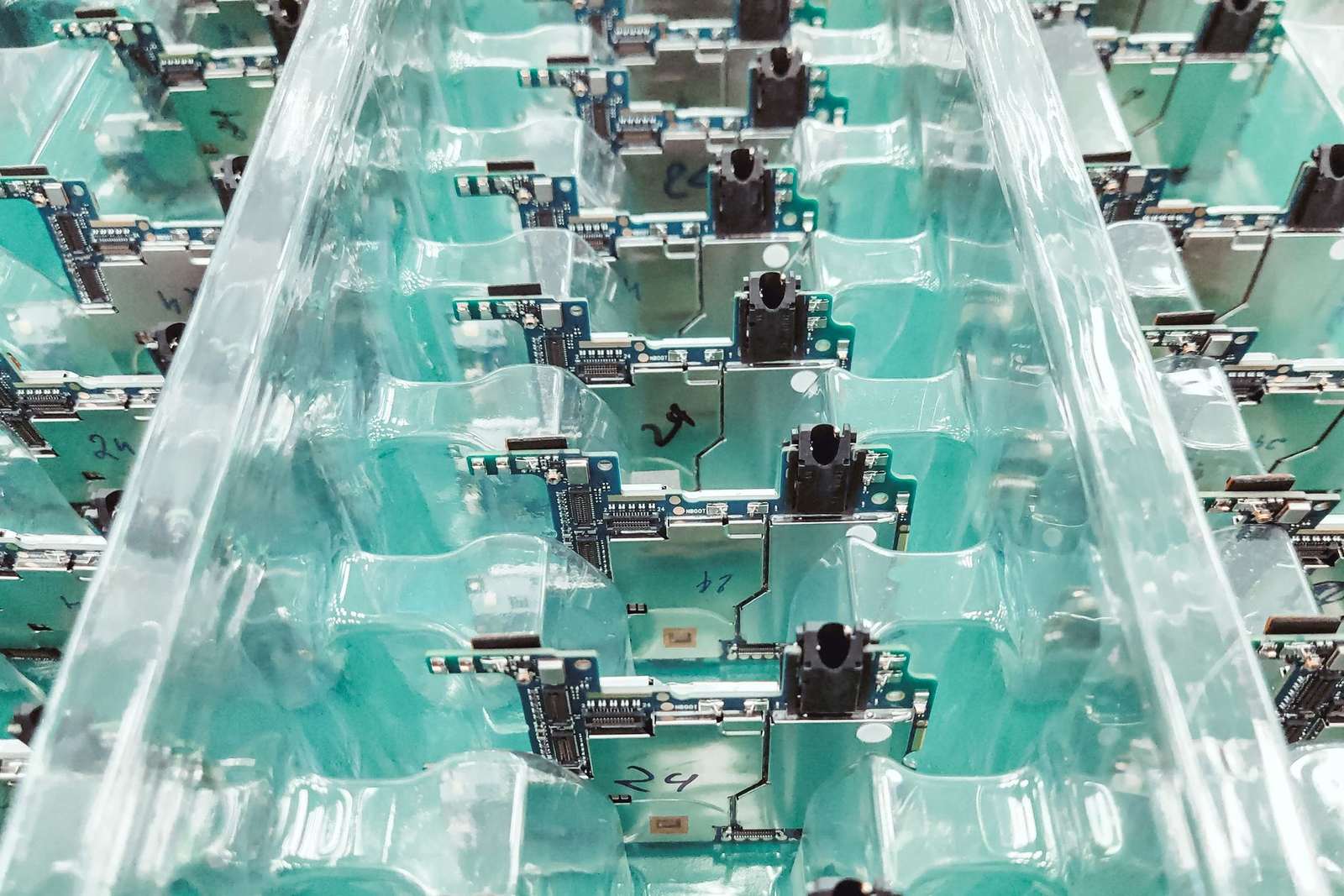
That campus is in China, in the central province of Henan. The scale of the site is why disruption there is felt across the whole smartphone market, as the next section shows.
What happens when a single campus is disrupted
The 2022 events at Zhengzhou are the clearest recent example of concentration risk. In CNN’s report from 30 November 2022, Wedbush Securities analyst Daniel Ives estimated that the supply disruptions at Foxconn’s Zhengzhou campus were costing Apple roughly $1 billion a week in lost iPhone sales. That is an analyst’s estimate rather than a figure reported by Apple.
The report describes how the disruption began. The troubles started in October 2022 when workers left the campus in Zhengzhou, the capital of the central province of Henan, due to Covid-related fears, and bonuses were offered to workers to return. Analyst Ming-Chi Kuo of TF International Securities estimated at the time that iPhone shipments could be 20% lower than expected in the October-to-December quarter.
The same report records a wider consequence. Analysts said Foxconn’s production woes would speed up the pace of supply chain diversification away from China to countries like India. The phrase captures the direction that Apple and its manufacturers have been moving in since, which the next section covers.
India and the move beyond China
India has become a second assembly base. Reuters reported in November 2024 that Tata Electronics had agreed to buy a majority stake in Taiwanese contract manufacturer Pegatron’s only iPhone plant in India, forming a new joint venture that strengthens Tata’s position as an Apple supplier. Under the deal as described by two sources, Tata would hold 60 per cent and run daily operations under the joint venture, while Pegatron would hold the rest and provide technical support. The report is available in a Malay Mail reprint of the Reuters story.
The Reuters piece also says Tata has been fast expanding into iPhone manufacturing, rivaling the only other iPhone contract manufacturer operating in India, Foxconn. It gives the motive in one sentence: Apple is increasingly looking to diversify its supply chain beyond China amid geopolitical tensions between Beijing and Washington.
Foxconn’s own profile confirms that India is among the markets where it has established manufacturing centers. Together, the filing, the profile and the Reuters report describe a supply chain that is still anchored in Asia but spreading across more countries.
Reading the supply chain correctly
Several points help when interpreting headlines about who makes iPhones.
- Assembler versus designer: Apple designs the product, and outsourcing partners perform final assembly.
- Assembler versus component maker: Apple’s filing separates single-source partners that supply and manufacture components from the partners that do final assembly.
- Country versus company: A factory can be owned by a Taiwanese firm, as Foxconn and Pegatron are, while sitting in China or India.
- Ownership can change: The 2024 Pegatron deal shows a plant switching from one contract manufacturer to a joint venture led by another company.
For how Chinese-market sales are shared among phone brands, including Apple, see the overview of china smartphone market share. Another manufacturing sector with its own supply chain and regulations is covered in the guide to chinese drone makers.
Frequently asked questions
Does Apple build iPhones itself?
Show answer
Apple designs the product but outsources the assembly. Its annual filing says final assembly of substantially all of its hardware products is done by partners primarily located in Asia.
Is Foxconn the same company as Hon Hai?
Show answer
Yes. Hon Hai Technology Group uses Foxconn as its trading name, and its own profile refers to the group as Hon Hai Technology Group (Foxconn).
Are all iPhones assembled in China?
Show answer
No. Apple’s filing lists India among the places where outsourcing partners manufacture, and Reuters reported in 2024 that Tata and Foxconn were the two iPhone contract manufacturers operating in India.
Why is Apple moving production beyond China?
Show answer
Reuters reported that Apple is increasingly looking to diversify its supply chain beyond China amid geopolitical tensions between Beijing and Washington.