Power bank capacity is printed in milliamp-hours (mAh), but the figure that measures stored energy is watt-hours (Wh), which also depends on cell voltage. Comparing banks and checking air-travel limits both come down to converting between the two.
This guide is part of the gadget buying guide, which covers how to read specifications across chargers, audio gear and other portable electronics.
What mAh and Wh actually measure
A milliamp-hour is a unit of electric charge, not of energy. It says how much current a battery could supply for how long, but it says nothing about the pressure behind that current. Voltage supplies that missing piece. Anker’s conversion guide puts it plainly: a 10,000mAh battery at 7.4V stores twice the energy of one at 3.7V.
Watt-hours fold voltage and charge into one number. The same guide explains that watts describe the rate at which power moves, while watt-hours describe stored energy. That distinction matters because shoppers often confuse a bank’s capacity (how much energy it holds) with its output rating (how quickly it can deliver that energy).
For that reason, regulators and airlines use watt-hours rather than milliamp-hours. A single mAh figure on a box cannot be compared across products unless the voltage is known, whereas a Wh rating can be compared directly.
How to convert mAh to Wh
The conversion is a single multiplication. According to Anker’s guide, the formula is Wh = (mAh × V) ÷ 1,000, where V is the nominal voltage of the battery cells. Its worked example is a battery rated at 20,000mAh and 3.7V: multiply 20,000 by 3.7, then divide by 1,000, and the result is 74Wh.
The reverse direction works the same way. The guide gives a 37Wh battery at 3.7V as an example: (37 × 1,000) ÷ 3.7 = 10,000mAh.
The voltage to use is the one that belongs to the rated capacity. The guide warns against using the USB output voltage simply because the port says 5V or 9V, and says to use the nominal voltage associated with the rated mAh capacity. Cells inside a power bank are rated at their own nominal voltage regardless of what the USB port negotiates with a phone or laptop.
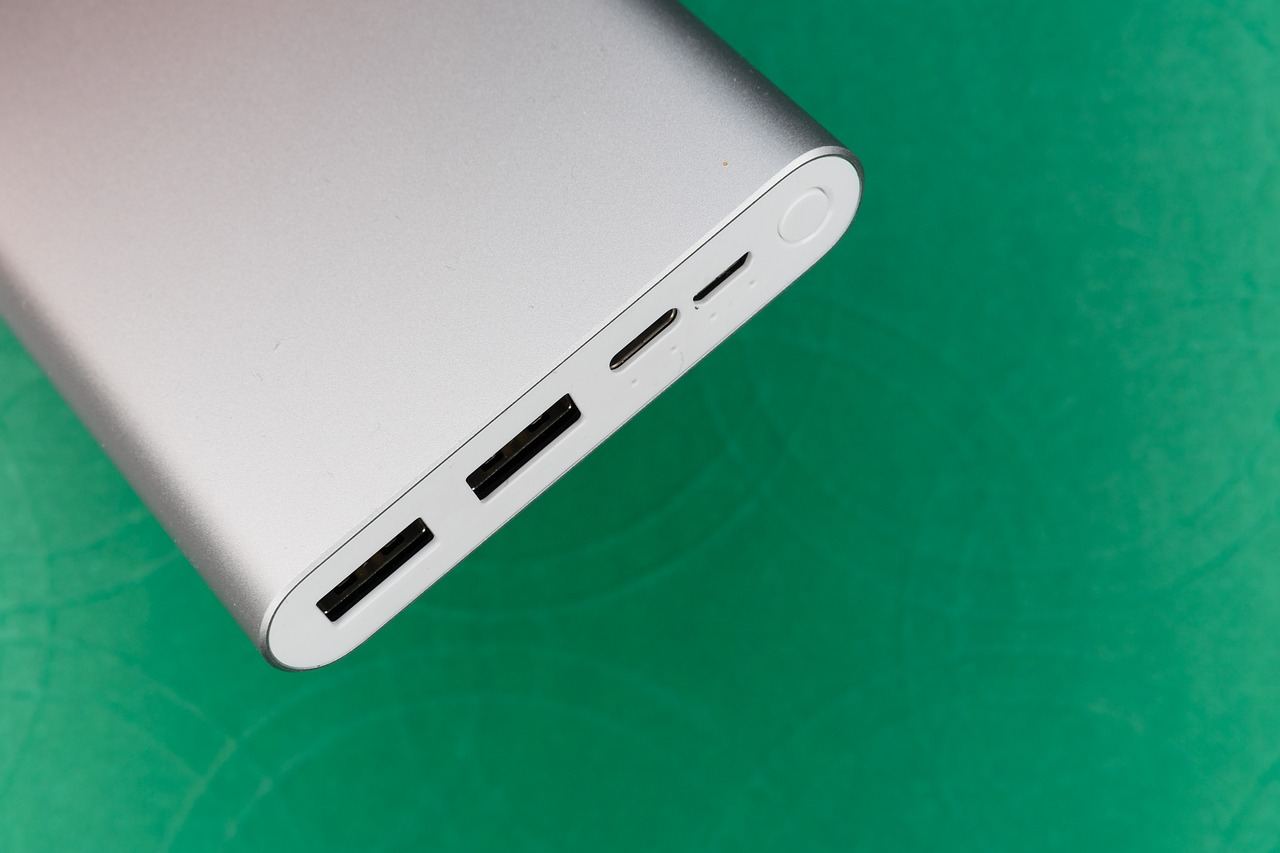
When a product lists both figures, the Wh rating is the more reliable one to compare. If only mAh is printed, look for the voltage in the specification sheet, on the label or in the manual before doing the arithmetic, because the same mAh number can describe very different amounts of energy.
Why a power bank never delivers its rated capacity
The rated figure describes energy inside the cells. Anker’s guide states that a 10,000mAh power bank will not deliver its full rated capacity to a phone battery.
The same guide lists the factors that affect real-world results:
- Voltage-conversion efficiency
- Wired or wireless charging
- Cable quality and length
- Battery age and condition
- Surrounding temperature
Wireless charging adds further transfer losses, and alignment and case thickness also play a part. The practical consequence is that two banks with identical labels can deliver somewhat different amounts of charge in use, and a bank that has aged will deliver less than it did when new. A rough expectation, rather than a promise of full capacity, is the sensible way to read the label.
Capacity is not charging speed
A larger bank is not necessarily a faster one. Anker’s guide notes that a 20,000mAh unit is not automatically faster than a 10,000mAh model, and that mAh and Wh describe available energy while watts indicate the delivery rate. A big bank with a modest per-port output will take a long time to refill a laptop, while a small bank with a high output can empty quickly.
Speed is governed by the port and the charging protocol rather than the cell count. The same logic applies to wall adapters: a compact gan charger can deliver high wattage from a small body, but wattage says nothing about how much energy a battery holds. Per-port output, combined output across several ports and device compatibility are separate specifications from capacity.
Reading a power bank label
A label can carry several numbers that look similar but mean different things: a capacity in mAh, an energy rating in Wh, and output ratings in volts, amps or watts. Anker’s guide advises keeping the Wh and voltage figures from the same battery pack, because mixing figures from different parts of a product’s documentation produces nonsense. It also recommends stating the voltage beside any converted figure, since using 5V or 12V would change the answer.
Two habits make comparison easier. First, compare Wh where possible and allow for conversion losses, as the guide puts it. Second, look at the output specification separately: check per-port output, combined output and device compatibility. A bank with a large Wh rating but a low per-port output suits overnight top-ups, whereas a bank with a higher output suits a laptop or a tablet that draws more power.
The guide also lists energy reserved by protective circuitry among the factors that affect real-world capacity. This is one more reason why the number on the box is a ceiling rather than a delivery guarantee.
Capacity and air travel limits
Watt-hours are the unit that aviation rules use. The US Federal Aviation Administration says lithium-ion (rechargeable) batteries are limited to a rating of 100 watt hours (Wh) per battery in passenger baggage. With airline approval, passengers may also carry up to two spare larger lithium-ion batteries rated between 101 and 160 Wh. The FAA’s PackSafe overview also states that lithium battery-powered rechargeable devices such as large power banks with a capacity of more than 160 watt hours (Wh) are not allowed on passenger aircraft.
Where a bank goes matters too. The FAA says spare lithium-ion batteries, including power banks and cell phone battery charging cases, must be carried in carry-on baggage only. It also notes that many airlines may have stricter quantity and Wh limits, including how many power banks each passenger may carry regardless of Wh capacity, and tells passengers to check with their air carrier before travelling.
A bank sold only with an mAh rating can be converted with the formula above, but a printed Wh figure removes the guesswork. The details of cabin rules, terminal protection and airline policies are covered in the guide to power bank airline rules.
Frequently asked questions
Is a higher mAh number always better?
Show answer
No. A higher mAh figure only means more charge at a given cell voltage. Energy is what counts, so the Wh rating is the better basis for comparison, and the output rating in watts decides how quickly that energy can be delivered.
Why does my phone not get the full rated capacity from a power bank?
Show answer
Energy is lost as heat during voltage conversion and charging. Anker’s guide says a 10,000mAh power bank will not deliver its full rated capacity to a phone battery, and cable quality, temperature and battery age all affect the result.
How do I convert Wh to mAh?
Show answer
Multiply the watt-hours by 1,000 and divide by the battery’s nominal voltage. A 37Wh battery at 3.7V works out to 10,000mAh.
Which voltage should be used in the conversion?
Show answer
Use the nominal voltage tied to the rated capacity, usually printed on the pack, its packaging or the manual, rather than the 5V or 9V of the USB port.