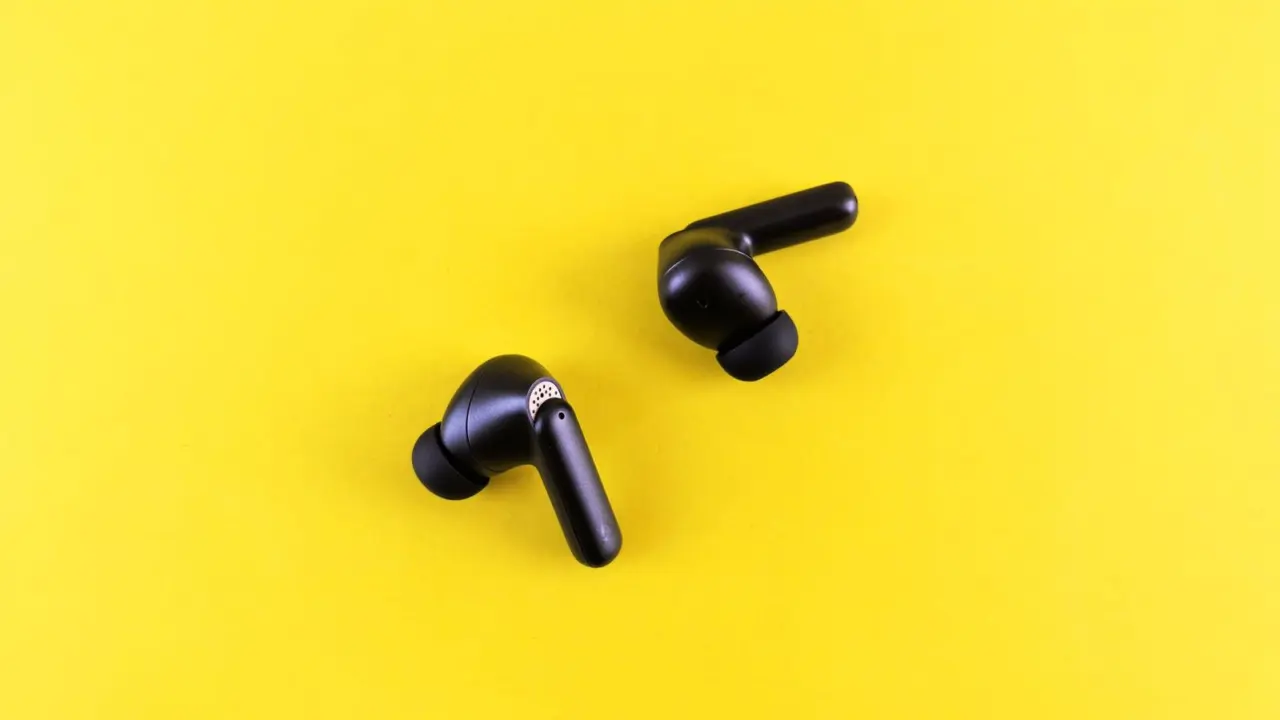
Bluetooth codecs are the compression methods that squeeze music into a wireless stream and unpack it again in your headphones. Which codec plays depends on what both the phone and the headphones support.
This guide sits inside the wider gadget buying guide and covers the codecs named most often on headphone boxes: SBC, AAC, aptX, LDAC and LC3.
What a Bluetooth codec actually does
A codec is an audio coding algorithm. Sony’s help guide for its headphones defines it as the method used when sound is sent wirelessly over a Bluetooth connection. Raw digital audio is far too bulky to send reliably over a short-range radio link shared with other devices, so the phone compresses the music before sending it, and the headphones decompress it on arrival. Because the compression throws away some detail, every codec in this guide is a trade between audio quality, reliability of the connection and how much processing power the device needs.
Two devices only use a codec if both of them support it. When a phone and a pair of earbuds connect, they compare the codecs each one offers and settle on one that both know. If the better codec is missing on either side, the connection falls back to a simpler one that both share. That is why buying headphones with an advanced codec does nothing for you if the phone cannot speak it.
Codec names often appear together with a bit rate, which is the amount of data sent each second. A higher bit rate gives the encoder more room to preserve detail, but it also needs a stronger radio link. Newer codecs aim to deliver good quality at lower bit rates, which is one reason the older ones and the newer ones are not simply ranked by a single number.
SBC: the baseline every device supports
SBC is the codec you can count on. Sony describes SBC as the standard audio coding technology used in Bluetooth devices, and states that all Bluetooth devices support it. The name is short for Subband Codec.
Because SBC is universal, it is the fallback whenever two devices have nothing better in common. Sony’s LDAC page uses an SBC stream of 328 kbps at 44.1 kHz as the Bluetooth baseline it compares its own codec against.
The weakness of SBC is not that it is unusable. It is that it is the plain default, and the codecs below were created to improve on it in specific ways: higher bit rate, better efficiency or lower delay.
AAC, aptX and LDAC: the optional upgrades
AAC, aptX and LDAC are optional codecs that sit on top of SBC. A phone and headphones must both support one of them before it is used.
AAC
AAC stands for Advanced Audio Coding. Sony’s help guide says AAC is mainly used in Apple products such as iPhone and can provide a higher sound quality than SBC. For people with an iPhone, AAC is therefore the upgrade that is available without extra settings, provided the headphones support it.
aptX and its variants
aptX is a family of codecs from Qualcomm. The aptX HD page describes a version designed to carry 24-bit audio over Bluetooth, with a stated bit rate of 576 Kbits at 48 kHz sampling. The aptX Adaptive page describes a variant that changes its bit rate to suit the wireless conditions, typically from 279 kbps to 420 kbps. Both depend on the phone and the headphones carrying compatible Qualcomm technology, so the codec shows up mostly on devices whose makers have chosen to include it.
LDAC
LDAC is Sony’s codec. Sony states that it can transmit audio, including high-resolution audio, at a maximum bit rate of 990 kbps. In its adaptive “best effort” mode the bit rate shifts automatically among 330 kbps, 660 kbps and 990 kbps depending on the connection conditions, which trades quality for stability when the signal is crowded. Sony also states that LDAC source code was contributed to the Android Open Source Project, so phone makers can include it, although a licence from Sony is required to implement the LDAC software.
A higher bit rate is not a guarantee of better-sounding music. It only means more data is available to describe the sound, and the result depends on the music file, the headphones and the listening environment.
LC3 and LE Audio: a different approach
LC3 is the codec for Bluetooth LE Audio, a newer part of the Bluetooth standard. The Bluetooth SIG, which maintains the standard, describes LC3 as an efficient Bluetooth audio codec for use in LE Audio profiles, introduced to replace SBC. Sony’s guide adds that LC3 achieves low-latency transmission and is used when its headset connects over LE Audio, while SBC and AAC are used over the classic connection.
The SIG compared SBC and LC3 on a standard grading scale for audio impairment. At a bit rate of 345 kbps, SBC scored a value just above 4.0, whereas LC3 scored an even higher result with less than half that bit rate, at 160 kbps. The point of LC3 is therefore efficiency: comparable or better quality from less data.
LC3 does not replace the other codecs overnight. A phone has to support LE Audio, the headphones have to support it, and the headphones may still use SBC or AAC over the classic connection with older phones.
Comparing the common codecs
The table below puts the figures quoted above side by side. These are the maximum or typical bit rates stated by the codec owners, not measured results from any particular headphones.
| Codec | Owner or origin | Stated bit rate |
|---|---|---|
| SBC | Required baseline in Bluetooth devices | 328 kbps at 44.1 kHz in Sony’s comparison |
| LDAC | Sony | 330, 660 or 990 kbps |
| aptX HD | Qualcomm | 576 Kbits at 48 kHz sampling |
Figures come from Sony’s LDAC page and Qualcomm’s aptX HD page.
Reading the table, remember that bit rate alone does not decide quality. The SIG’s own comparison shows a newer codec beating an older one at a much lower bit rate, which is why the table cannot be read as a ranking.
Checking and choosing a codec
To find out which codec is in use, check the phone’s settings and the instructions supplied with the headphones. Sony’s guide notes that if the connected device supports a codec of higher sound quality than SBC, you may need to set the device beforehand to use the codec you want, and it points readers to the instructions supplied with the connected device.
When comparing headphones, start with the phone you own. An iPhone owner gets the most from AAC support, while an Android owner should look at which optional codecs their phone lists. Codec choice is also separate from other features of a pair of headphones, such as how noise cancelling works, which depends on microphones and processing inside the headphones rather than on the wireless link.
Earbuds and their charging cases also contain lithium batteries, so readers who travel with them can find the carry-on limits in a separate guide to power bank airline rules, and should confirm the details with their airline.
Frequently asked questions
Do all Bluetooth headphones support SBC?
Show answer
Yes. Sony states that all Bluetooth devices support SBC, which is why it works as the fallback between any two devices.
Is LDAC better than AAC?
Show answer
LDAC can send more data per second than AAC, but sound quality also depends on the music, the headphones and the connection. Both devices must support the codec for it to be used at all.
Do I need LE Audio to use LC3?
Show answer
Yes. LC3 is the codec of Bluetooth LE Audio, so the phone and the headphones both need LE Audio support for LC3 to be used.
Why does my phone use SBC when my headphones support aptX?
Show answer
The phone must support aptX as well. If it does not, the two devices negotiate a codec they share, and that is usually SBC.