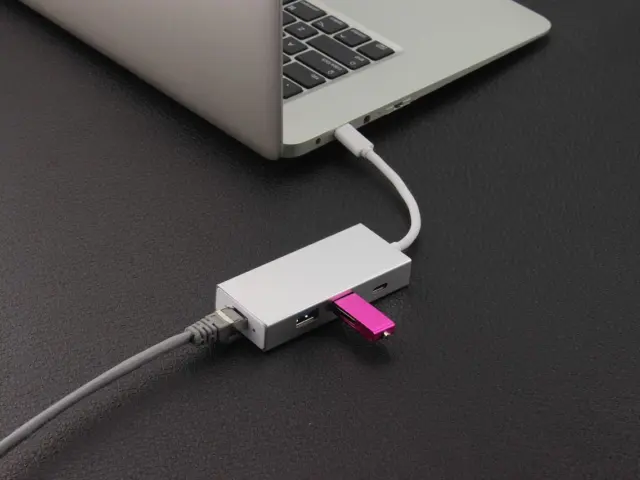

USB-C power delivery is the USB Power Delivery (USB PD) specification, a set of rules that lets a charger and a device agree on how much power to send over one USB Type-C cable.
The wider context for choosing chargers, cables and other accessories sits in the gadget buying guide, and this page covers the charging standard itself.
What USB Power Delivery is
The USB Implementers Forum (USB-IF) describes how the role of the port has changed. In its words, “USB has evolved from a data interface capable of supplying limited power to a primary provider of power with a data interface.” USB PD is the specification that makes that possible, because it carries flexible power along with data over a single cable.
The key idea is negotiation. A plain USB port offers a fixed, modest amount of power. A USB PD charger instead announces what it can supply, the device answers with what it needs, and the two settle on a voltage and current that both can handle. The USB-IF notes that this lets low-power products such as headsets ask for only the power they require, while a laptop can ask for much more from the same kind of port.
Power direction is also flexible. The USB-IF states that “Power direction is no longer fixed”, so either the host or the peripheral can be the one supplying power. In practice this is why a monitor connected to the wall can charge a laptop while it also carries the picture, a use the USB-IF lists as an example.
Compatibility with older equipment was part of the design. The USB-IF says Power Delivery “is designed to co-exist with standard USB Battery Charging implementations”, so a USB PD charger is not a separate world from the plain USB chargers that came before it. The same page says the extra capability also enables new uses, including USB bus-powered hard disk drives and printers, which removes the need for a separate power brick.
Because the specification covers so many device types, a single port on a modern product may behave very differently from the same-shaped port on another product. A small accessory may only ever draw a little power, while a laptop can ask for a great deal. The negotiation is what keeps both safe on the same style of connector, and it is also why two chargers with similar plugs can show very different charging behaviour with the same phone.
Voltage levels and power ceilings
Earlier revisions of the specification defined a set of fixed power profiles. Those profiles were later deprecated and replaced by power rules, which define four normative voltage levels at 5, 9, 15 and 20 volts. A supply may offer any maximum output between 0.5 W and 100 W instead of picking from a short fixed list of profiles.
The 100 W ceiling came from the combination of 20 volts and 5 amps. The USB-IF explains that before the 2021 update, USB PD was limited to 100W using a solution based on 20V and USB Type-C cables rated at 5A.
Revision 3.1 of the specification, announced in 2021, raised that ceiling. It added higher fixed voltages of 28V, 36V and 48V, which enable up to 140W, 180W and 240W respectively. This higher tier is called Extended Power Range (EPR), and the older levels were renamed Standard Power Range (SPR).
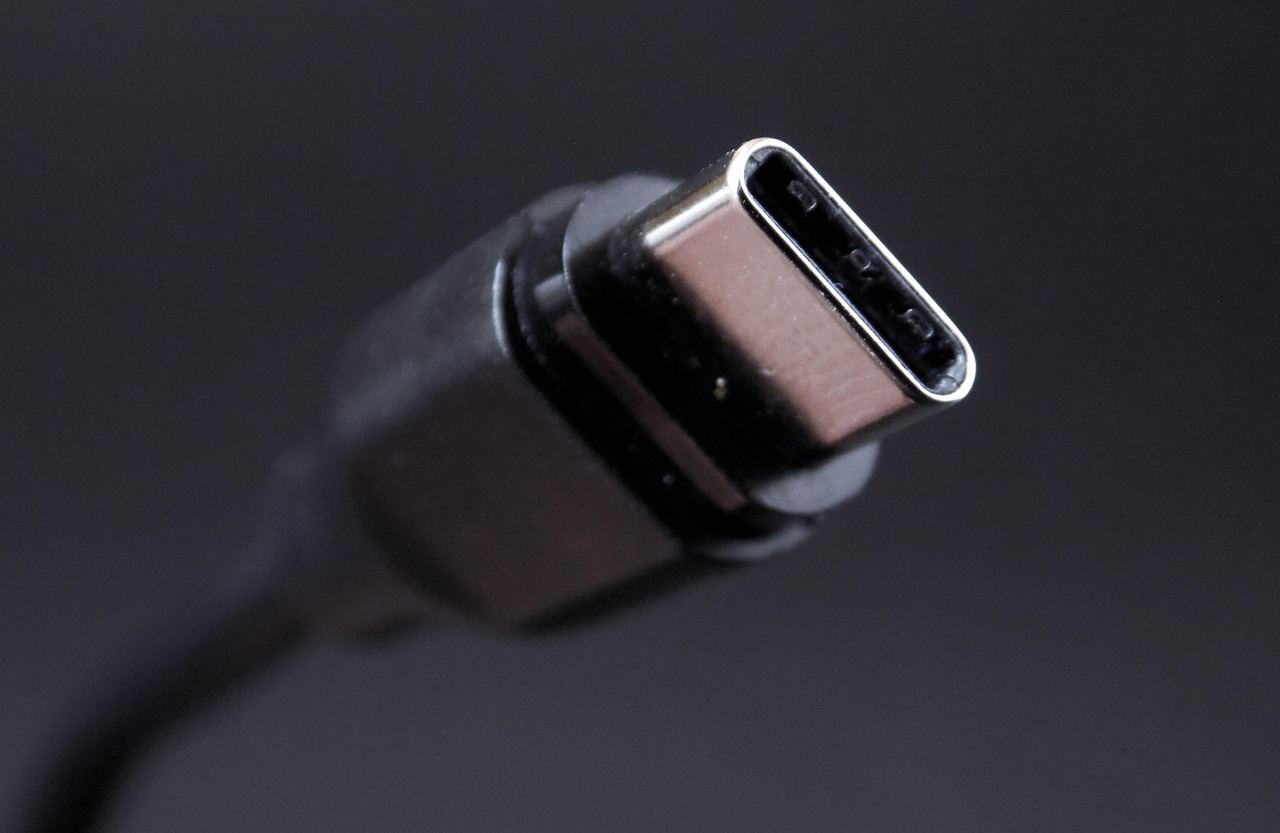
- Maximum power under USB PD revision 3.1: 240W
- Pre-3.1 limit 100W at 20V with 5A cables: 100W
- New fixed voltages and power levels: 28V, 36V, 48V; 140W, 180W, 240W
- Adjustable voltage supply mode between 15V and max: 15V
- Power direction not fixed: n/a
Cables and why the rating matters
The cable is part of the negotiation. A charger and a phone can both support high power, and the connection will still be limited by what the cable is rated to carry. The USB-IF’s own description of the 100W limit mentions cables rated at 5A, which shows that current rating is a property of the cable, not only of the charger.
Higher voltages raise the bar further. In the words of the specification summary on Wikipedia, “Higher voltages require electronically marked EPR cables that support 5 A operation”, with mechanical improvements introduced in the USB Type-C standard revision 2.1. The USB-IF likewise says the Type-C specification was updated to Release 2.1 to define 240W cable requirements.
For a reader comparing cables, the practical consequence is that a cable which fits is not automatically a cable that carries high power. Manufacturers state the rated wattage or current of a cable on its packaging or documentation, and that statement is the place to look rather than the plug shape.
Programmable power: PPS and AVS
Revision 3.0 of the specification defined an optional Programmable Power Supply (PPS) protocol. It allows granular control over the output, with a voltage range of 3.3 to 21 V in 20 mV steps and current in 50 mA steps, which suits constant-voltage and constant-current charging. PPS can reduce heat generation in both the charger and the device, according to the same source.
On January 8, 2018, the USB-IF announced the Certified USB Fast Charger logo for chargers that use the PPS protocol.
Revision 3.1 added a related feature for the higher tier. The USB-IF describes an adjustable voltage supply mode that lets a device request intermediate voltages between 15V and the maximum fixed voltage of the charger. Wikipedia’s summary gives its technical name as the Adjustable Voltage Supply (AVS) protocol, which allows specifying the voltage from a range of 15 to 48 V in 100 mV steps.
AVS and PPS are separate. The AVS protocol is not backward compatible with the PPS protocol, and a charger that supports AVS may not support PPS as well. In October 2023, the USB PD promoter group launched revision 3.2 of the specification, in which AVS also works within the older standard power range, down to a minimum of 9 V.
What this means when choosing a charger
Because the standard is negotiated, the useful questions about a charger are about what it offers, not what it is called. Which voltage levels does it list? What maximum wattage does it state? Does it list PPS if the phone needs it? These details appear in the manufacturer’s product documentation, and they are the sources to consult if a specific device has special needs.
Smaller chargers built with newer semiconductor materials are covered separately in the explainer on how a GaN charger differs from a conventional one. Connection hardware that passes power through to a laptop is covered in the comparison of a USB hub vs docking station, which is relevant because the USB-IF notes that USB power bricks can pass power through a laptop’s USB ports.
Charging many devices from one multiport charger also follows the negotiation model, because the USB-IF says power management can be optimised across several peripherals, with each device taking only the power it requires.
Frequently asked questions
What does USB PD stand for?
Show answer
USB PD stands for USB Power Delivery, the specification from the USB Implementers Forum that lets chargers and devices negotiate power over USB Type-C.
What is the maximum power USB Power Delivery can carry?
Show answer
According to the USB-IF, revision 3.1 enables delivering up to 240W of power over a full-featured USB Type-C cable and connector. Before that update the limit was 100W.
Do all USB-C cables carry the same power?
Show answer
No. The USB-IF describes cables rated at 5A for the 100W level, and Wikipedia’s summary of the specification says the higher voltage levels need electronically marked cables that support 5 A operation. The rating is stated by the cable maker.
What is the difference between PPS and AVS?
Show answer
PPS, from revision 3.0, offers voltage steps of 20 mV within a range of 3.3 to 21 V. AVS, from revision 3.1, offers steps of 100 mV within a range of 15 to 48 V. They are not backward compatible with one another.