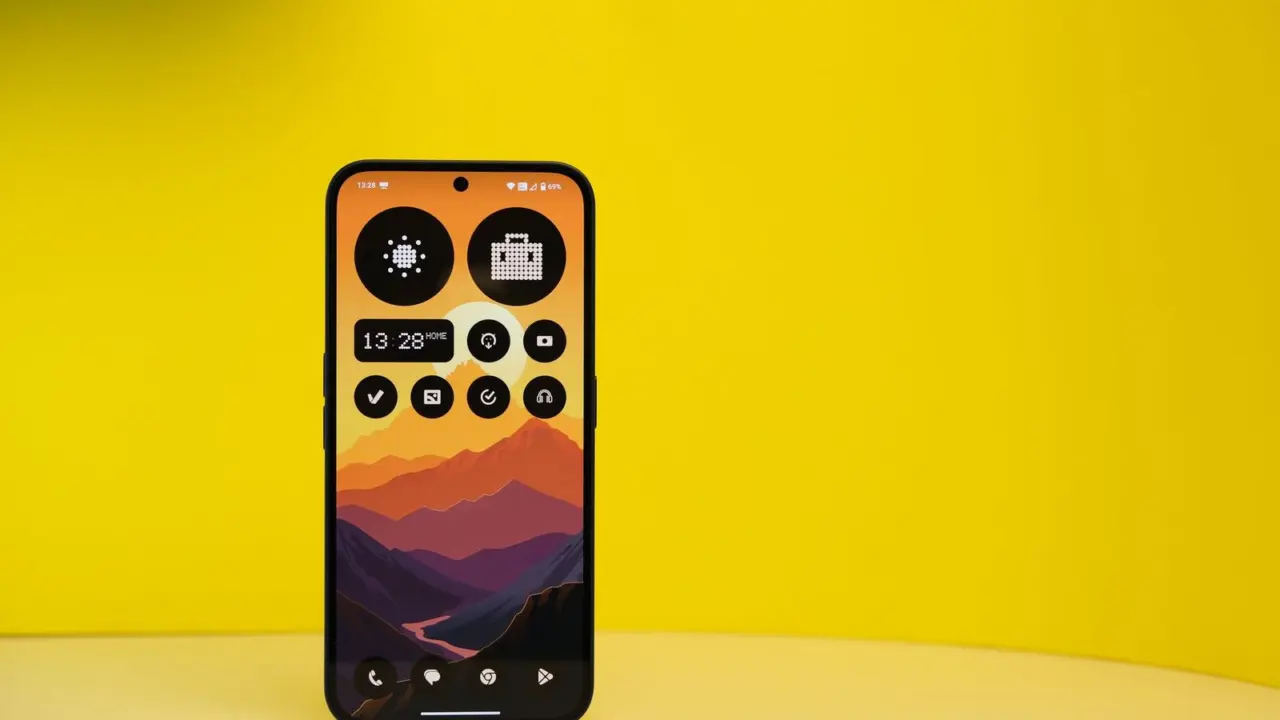
OLED vs LCD comes down to where the light originates: an OLED screen produces light in each pixel, while an LCD shines a backlight through a layer of liquid crystals. That difference drives contrast, black levels, thickness, burn-in risk and price.
It is one of several display and hardware decisions covered in the guide on how to choose a smartphone.
How an LCD phone screen makes an image
A liquid-crystal display does not make light itself. According to Wikipedia’s entry on LCDs, liquid crystals do not emit light directly but instead use a backlight or reflector to produce images. In a phone, the backlight sits behind the panel and stays lit while the crystals open or close to let the right amount of light through each red, green and blue sub-pixel.
The consequence is that an LCD pixel showing black is a pixel blocking light that is still being produced behind it. IPS, the panel type named in Apple’s specifications for its LCD iPhones, is one common LCD design.
How an OLED phone screen makes an image
An organic light-emitting diode works differently. Wikipedia describes an OLED as a type of light-emitting diode in which the emissive electroluminescent layer is an organic compound film that emits light in response to an electric current. The US Department of Energy puts it in similar terms in its OLED basics page: the intensity of the light emitted is controlled by the amount of electric current applied by the electrodes.
The Department of Energy describes an OLED as a solid-state device consisting of a thin, carbon-based semiconductor layer that emits light when electricity is applied by adjacent electrodes, with the light’s colour determined by the type of emissive material used. In a phone, each pixel is its own tiny light source, so there is no backlight layer to build, and a pixel that should be black can simply switch off. Wikipedia notes that because OLEDs can turn off individual pixels to show true black, the contrast ratio of an OLED display can be very large, which also helps with high-dynamic-range (HDR) images and video.
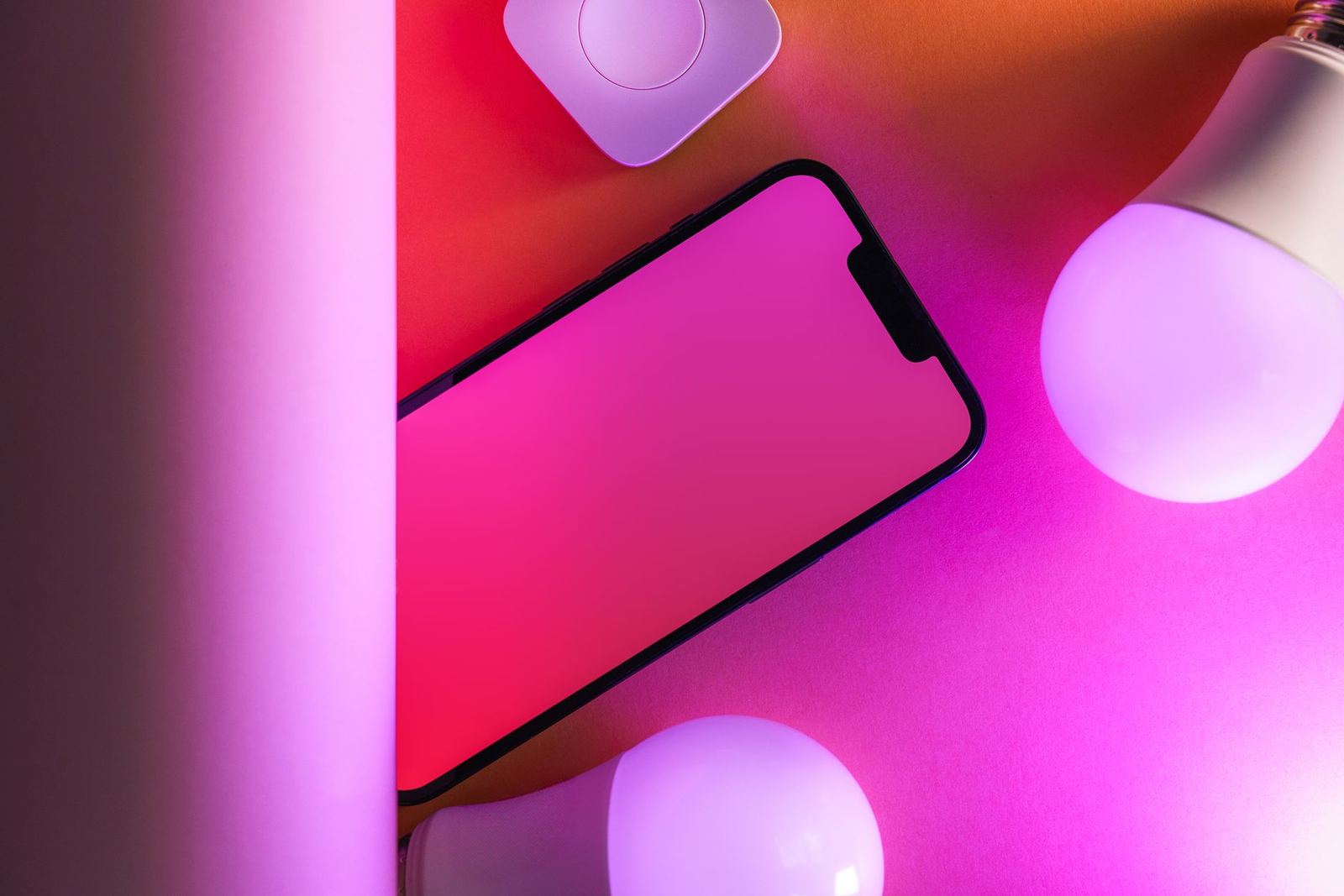
The Department of Energy page adds that OLEDs can be made in almost any shape and can be deposited on flexible substrates. Together with the lack of a backlight layer, that makes the panel structure simpler than an LCD stack in principle.
What manufacturer specifications show
Apple’s published specifications offer a like-for-like illustration, because the company has sold both types. They are one manufacturer’s own typical figures and are not independent measurements, and the two phones below come from different generations, so the table is a snapshot rather than a verdict on either technology.
| Specification | iPhone 16 (OLED) | iPhone 11 (LCD) |
|---|---|---|
| Panel | 6.1-inch all-screen OLED | 6.1-inch all-screen LCD with IPS technology |
| Contrast ratio (typical) | 2,000,000:1 | 1400:1 |
| Resolution | 2556-by-1179 at 460 ppi | 1792-by-828 at 326 ppi |
Figures are taken from Apple’s iPhone 16 specifications and its iPhone 11 technical specifications.
The contrast gap is the clearest difference, and it follows from the pixel-level control described above. Brightness tells a more mixed story. Apple lists the OLED iPhone 16 at 1000 nits maximum brightness (typical), with 1600 nits peak for HDR and 2000 nits peak outdoors, while the LCD iPhone 11 is listed at 625 nits maximum brightness (typical). The iPhone 16 page also lists a minimum brightness of 1 nit. Typical and peak figures are different measures, so they should not be compared directly.
A second LCD model gives the same picture. Apple’s iPhone SE specifications list a 4.7-inch widescreen LCD with IPS technology, a 1400:1 contrast ratio (typical) and 625 nits maximum brightness (typical), matching the LCD phone in the table on those two lines despite the very different screen size.
Burn-in and ageing
Because an OLED pixel produces its own light, it wears as it is used. Wikipedia states that, compared to LCDs, OLEDs may be more susceptible to screen burn-in and brightness degradation. Burn-in is a faint, permanent ghost of a static image such as a navigation bar left on screen for long periods.
LCDs are not immune to image problems. The same encyclopedia says LCDs are not subject to screen burn-in like on CRTs, but they are still susceptible to image persistence, a temporary effect. For most people the practical lesson is the same for both technologies: static images at full brightness for hours are the most likely cause of trouble, and readers who are concerned can check the manufacturer’s own documentation for what its warranty covers.
Cost and where each type appears
Cost is the factor the Department of Energy singles out for OLED in its lighting page, which says the major barrier to OLED market adoption is cost. Phone panels are a different product, so that statement is a pointer rather than a price comparison. Apple’s own range shows both technologies in use: the iPhone 16 specification lists an OLED panel, while earlier models in the line, such as the iPhone 11, used LCD.
A panel type is only one input to how a screen looks and feels. Smoothness, for instance, depends on the refresh rate, which is explained in the article on the 120hz refresh rate, and the sensor behind a camera lens is a separate matter, discussed in the piece on phone camera megapixels.
Choosing between them
If deep blacks and strong contrast matter, for example for watching video in a dark room, OLED has an inherent advantage because pixels can switch fully off. If budget is the priority and the phone will mostly be used in bright rooms or outdoors, a well-made LCD can be perfectly adequate, and it avoids the ageing questions that come with self-emissive pixels.
When comparing listings, look at the maximum brightness, the resolution and the contrast figures together and note whether a manufacturer is quoting typical or peak values.
Resolution and pixel density are a separate question from panel type. In the table, the OLED iPhone 16 is listed at 460 ppi and the LCD iPhone 11 at 326 ppi, but the SE model listed above is also an LCD at 326 ppi with a different resolution of 1334-by-750, so pixel density varies with the design of the phone as well as the screen technology. Comparing specification lines one at a time, rather than assuming that a panel type settles everything, gives a clearer picture of what a particular phone offers.
Frequently asked questions
Is OLED better than LCD on a phone?
Show answer
OLED offers much higher contrast because pixels can turn off completely, while LCD is typically cheaper and avoids burn-in. Which suits a buyer depends on budget and how the phone is used.
Do OLED screens suffer burn-in?
Show answer
Wikipedia says OLEDs may be more susceptible than LCDs to burn-in and brightness degradation. Leaving a static image at high brightness for long periods is the usual cause.
Why do OLED phones show deeper blacks?
Show answer
Each OLED pixel makes its own light, so a black pixel can be switched off, whereas an LCD pixel has to block a backlight that stays on.
Do LCD phones use a backlight?
Show answer
Yes. Liquid crystals do not emit light directly, so an LCD relies on a backlight or reflector to produce images.